

Dr Leilah Bidwell*, Dr Angela Cymerman, Dr Preethi Gopinath, and Dr Vasi Sundaresan
Princess Alexandra Hospital NHS Trust, Harlow, UK
*Corresponding Author: Dr Leilah Bidwell, Princess Alexandra Hospital NHS Trust, Harlow, UK
Abstract
Introduction: Sodium nitrite (NaNO₂) has worryingly emerged as an increasingly used method of suicide due to its ready availability and misleading online portrayal as a peaceful means of death. Recent media coverage, including a Channel 4 documentary, has drawn attention to a growing number of cases.
Methods: We report three sodium-nitrite-related deaths occurring over a nine-month period (May 2024 – February 2025) in the Southeast of England. Each case was investigated with a post-mortem examination, with additional toxicological testing for nitrites, nitrates, and methemoglobin levels where indicated.
Results: Not all cases displayed classic features such as chocolate-brown blood or organ discolouration. In each, different investigative triggers led to nitrite testing, confirming markedly elevated nitrite levels (up to 30,000-fold above normal). Methemoglobinemia was identified in all cases.
Conclusion: Detection of sodium nitrite and methemoglobinemia post-mortem is challenging due to sample degradation and specific analysis based on the pathologist request rather than as part of the routine analysis. Early collection and analysis are essential for reliable results. Vigilance among clinicians and pathologists is vital, as no single diagnostic clue is universally present. Ongoing awareness and early toxicological testing are essential to ensure accurate case recognition and monitoring of this evolving trend.
Keywords: Suicide, Sodium Nitrite, NaNO₂, Sodium Nitrate, NaNO3, Case Series, Overdose, Autopsy, Toxicology, Post-mortem
Introduction
Sodium nitrite (NaNO2) is a white-to-yellow crystalline powder [1] used industrially as an antimicrobial, food preservative, and component of anti-freeze [2, 3]. At therapeutic doses it acts as an antidote to cyanide poisoning [1] but ingestion of larger quantities causes cellular hypoxia, potent vasodilation and severe hypotension [4]. This is due to acute methaemoglobinaemia, where iron oxidation from Fe2+ to Fe3+ renders Methaemoglobin (MetHb) unable to bind, and therefore transport oxygen to the tissues, usually MetHb accounts for 1-3% of total circulating haemoglobin, once levels rise above 50% patients become symptomatic, and fatality is usually seen at concentrations above 70% [5].
The antidote for nitrite toxicity is methylene blue [4]. Sodium nitrite has an estimated lethal dose of 2.6g, although a fatal case after 1g, and survival after ingestion of 6g has been reported. It is readily available as pure granules via online retailers and use in suicide has been discussed in online forums [6]. Commercial “suicide kits” including anti-emetics, antacids together with detailed instructions remain readily accessible online [5, 7, 8, 9].
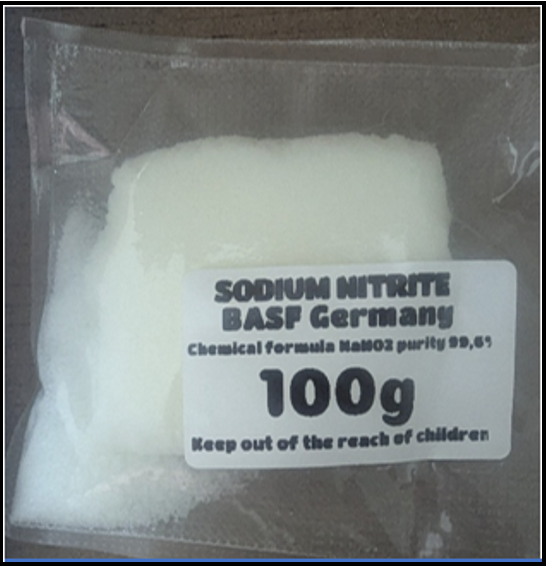
Figure 1: Sodium Nitrite Powder Found At Scene, Purchased Online From “The Ukraine Seller”.
Toxicology
Testing for nitrites or nitrates is not part of routine toxicology screening at post-mortem [7, 10]. Commonly documented autopsy findings include those consistent with methaemoglobinaemia; blue-grey hypostasis and dark brown discolouration of blood and internal organs [1]. Some studies and case reports have also noted the presence of powder residue in the gastrointestinal tract [10].
Regulatory Developments
In June 2021 [4, 5], Italian authorities blocked access to a pro-suicide website to limit online promotion of sodium nitrite use. Governmental bodies have regulated the use of NaNO2 to protect public health and safety [10]. The UK Home Office subsequently classified sodium nitrite as a reportable substance requiring suspicious purchases to be reported [11]. However, this does not prevent the substance from being readily available with some websites offering consultations [4] and guidance on dosage and how to prevent vomiting. Reported sellers known as “The Ukraine Supplier [12]” and other sources recommend sodium nitrite as a peaceful option, such as The Peaceful Pill Handbook [1, 11].
Epidemiology
Multiple case series and reviews report an increasing global trend in sodium nitrite use for suicide [1, 4, 5, 11]. It has been suggested that the most affected demographic is under the age of 30, partially due to the use of the internet, and primarily suicide forums recommending sodium nitrite as a method of suicide. It is also of note that those using this method are in the ‘post-COVID era [7]’ which may have contributed to isolation and social media influence.
Awareness of sodium nitrite suicides has increased following widely reported cases involving alleged suppliers most notably in Canada and Ukraine; several have been the subject of ongoing official investigations and media coverage regarding the sale of NaNO2 to vulnerable individuals who later committed suicide [5]. An individual was arrested by Canadian police in May 2022 and is awaiting trial set for January 2026 for 14 counts of first-degree murder [13]. Another individual remains in Ukraine, investigations allege he has sold NaNO2 over 1000 times and caused at least 93 UK deaths [12].
We report three locally identified cases over nine months within the Essex and East London geography in the South-east of England, each discovered through different investigative triggers.
Case Series
Case 1 — May 2024
A 24-year-old African Caribbean male was found unresponsive in a hotel room. There were no external injuries. Two large bags (302 g) of pale-yellow crystalline powder, digital weighing scales, and orange watery vomit were found at the scene.
History: Known anxiety and hypertension; regular fluoxetine 20 mg and prazosin 20 mg.
Findings: External examination revealed white foamy residue on lips and clothing. Internal examination showed left ventricular hypertrophy (24 mm 24 mm left ventricular wall thickness) and pulmonary oedema, but no organ or blood discolouration.
Toxicology: Metoclopramide was detected. Subsequent nitrite analysis revealed a ~30,000-fold elevation in nitrite (NO₂⁻) with no detectable nitrate (NO₃⁻).
Cause Of Death (as per Office of National Statistics format): 1a. Nitrite toxicity.
Case 2 — November 2024
A 17-year-old female was found unresponsive; resuscitation had been attempted. The coroner’s office had indicated sodium nitrite as a possible cause after discussion with the family.
Findings: Endotracheal tube in situ, significant cyanosis of lips and face with a grey discolouration of the face, and multiple healed self-harm scars. Post-mortem CT showed severe pulmonary oedema and congestive cardiac failure.
Toxicology: No common drugs detected on initial screening. Extended testing showed a 254-fold increase in nitrate levels and elevated methemoglobin.
Cause Of Death: 1a. Multi-organ failure with methaemoglobinaemia; 1b Nitrite toxicity.
Case 3 — February 2025
A 25-year-old Caucasian female with autism and a history of self-harm and previous suicide attempts was found collapsed after vomiting was heard during a phone call.
Scene: A handwritten note and packaging labelled 'Sodium Nitrite BASF Food Preservative NaNO₂ (purity 99.6%)' were discovered by relatives.
Findings: Slim build, cyanosis, and scarring consistent with prior self-harm. No internal organ discolouration.
Toxicology: Sertraline, Lamotrigine, and Naloxone were present at non-toxic concentrations. Nitrite analysis of femoral blood revealed a ~21,000-fold nitrite elevation with no nitrate detected.
Cause Of Death: 1a. Sodium nitrite toxicity.
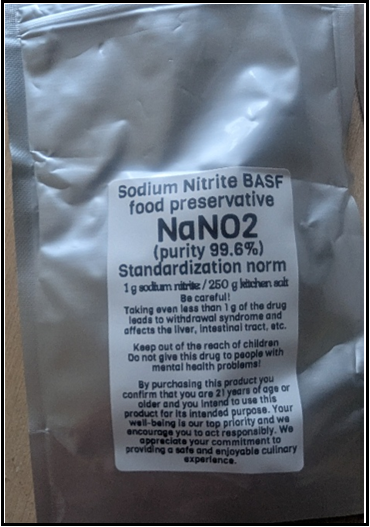
Figure 2: External Packaging Of Sodium Nitrite Found At Scene
Summary Of Analytical Findings
|
Parameter |
Case 1 |
Case 2 |
Case 3 |
|
Age/Sex |
24 / M |
17 / F |
25 / F |
|
Trigger for testing |
High metoclopramide; |
Facial cyanosis; pulmonary |
NaNO₂ found at scene |
|
Time between death and |
8 weeks |
8 weeks |
8 weeks |
|
Sample type |
Unpreserved femoral vein |
Plain blood sample, femoral vein |
Unpreserved femoral vein |
|
Sample quality |
Evidence of red blood cell lysis; amounts shown likely to be substantial underestimate of true concentrations |
||
|
Analytical method |
Ozone chemiluminescence |
||
|
Nitrite (NO2-) |
7314µM |
Not Detected |
5171µM |
|
Nitrate (NO3- |
0µM |
7605 µM |
0 µM |
|
MetHb (%) |
>70 |
65 |
>70 |
|
Cause of death |
1a. Nitrite toxicity |
1a. Multi-organ failure with |
1a. Sodium nitrite toxicity |
Analytical Methodology
No stabilisers were used prior to nitrite / nitrate testing. Blood samples from all three cases were centrifuged at 15,000 g, 4°C, for 5 minutes to remove debris, yielding a clear supernatant for dilution. Samples were analysed using gas-phase chemiluminescence (NOA 280i, Sievers), measuring the reaction between Nitric Oxide (NO) and ozone (O3). For every mole of NO2- or NO3- one mole of NO is generated.
Interpretation Of Nitrite Vs Nitrate Findings
In healthy fasting individuals, plasma NO2- is between 0.1-0.4µM, and for NO3- it is 20-40µM [14]. Dietary NO3- usually contributes significantly to circulating NO3- and NO2- concentrations. Dietary nitrate intake can increase NO3- ~10-fold and as a consequence of transport through the enterosalivary circuit, a doubling of circulating NO2- concentrations. Therefore, if there is no measurable NO3- a dietary source is unlikely to be responsible for the raise in NO2-.
NO2- has a very short plasma half-life (180 seconds) [7] before it is converted to NO3-. This conversion can and does continue after death, although it slows and ultimately ceases with reduced temperatures [15]. As such, in the absence of NO2-, NO3- can be used as an indirect indicator of nitrite intake in suspicious circumstances, although the diagnosis is still based on methaemoglobin analysis [16]. This is because the principal mechanism of nitrite toxicity is the oxidation of the ferrous iron Fe2+ to Fe3+ producing methaemoglobin [17]. Under normal conditions, approximately 3% of haemoglobin is oxidised to methaemoglobin [15], in cases of nitrite ingestion this is substantially higher.
Discussion
Clinical Presentation
These three cases illustrate the variable clinical and post-mortem presentation of sodium nitrite toxicity. Characteristic signs such as darkened blood may be absent. Alternate indicators: the presence of anti-emetics, powder residues, or unexplained facial cyanosis/grey skin discolouration was key to initiating further toxicological testing.
In these deaths. Recognition depended on indirect indicators: antiemetic presence, unexplained cyanosis, or scene evidence of NaNO2-.
Analytical And Diagnostic Considerations
Analytical confirmation remains challenging, as nitrite concentrations degrade rapidly post-mortem, with conversion to nitrate continuing after death [4]. Studies indicate up to 95% of the original concentration can be lost within one hour at room temperature, emphasising the importance of prompt collection. However, nitrate levels can be measured to compensate for this [7]. Nitrite stability can be preserved at -20°C if stabilised with potassium ferricyanide [11], however, this requires an initial suspicion as this is not a routine storage or preservative method. Interestingly one study found urinalysis often tests positive for nitrites without evidence of urinary tract infection in patients [1] in those using NaNO2 as a suicide method, however this was only used in the last 8 cases. This was more reliable in females, with an assumed sensitivity of 45% and specificity of 85% overall. Ultimately nitrate, nitrite and methaemoglobin levels should be tested immediately to prevent misinterpretation of values [11].
Epidemiological And Public-Health Implications
The suggestion that this is becoming a new trend is compounded by a 30% increase reported in suspected self-poisoning suicide attempts among individuals aged 10-19 in United States as reported by the National Poison Data System (NPDS) [19]. Media coverage and online availability likely contribute to its growing use [1].
The identification of three confirmed cases within nine months within a limited geography raises concern for potential under-recognition elsewhere. However, this is a local observation and cannot be interpreted as evidence of national prevalence.
Preventive And Regulatory Actions
Regulatory responses are emerging. The UK Home Office classification of NaNO2 as a ‘reportable substance [10]’ and the Italian judicial blocking of pro-suicide sites are positive steps. [4, 5]. Nonetheless, the compound remains accessible through international suppliers [1, 11] and online forums, underscoring the need for coordinated global regulation and public health surveillance to limit further harm.
Forensic Diagnostic Implications
While studies and previous case reports have documented common autopsy findings, these are not always present. The most recent systematic review found 19/63 cases had dark discolouration of the blood [5].
A case series of 20 patients found 80% had a history of depression or mental health issues [9], and antiemetic drugs were present in 35% of cases. Other studies found evidence of NaNO2 at the scene in most cases [1, 10], either in packaging, a glass, or white powder residue.
It is important to test as early as possible if any suspicion of Nitrite involved deaths. Detection of packaging or powder residue at the scene remains one of the most consistent clues [1, 10]. Femoral blood is considered the most reliable sample for nitrite analysis [5]. Prompt sampling, along with parallel measurement of nitrates and methaemoglobin, provides the best diagnostic accuracy. Studies monitoring methaemoglobin changes in samples during storage recommend samples be taken at autopsy [18], refrigerated and stored in EDTA preservative, and for longer storage samples should be frozen with cryoprotectant and stored at -80°C.
Limitations
This series is limited by its small sample size, single institution setting, and potential ascertainment bias, as cases of sodium nitrite toxicity may be underreported or misclassified. Additionally, varying postmortem intervals and testing conditions may have influenced nitrite stability and measured concentrations. The findings are descriptive and cannot be generalised beyond the local population.
Conclusion
Sodium nitrite toxicity represents a growing but under-recognised method of self-poisoning. The variability in clinical and post-mortem findings underscores the importance of considering NaNO2 ingestion, even if classic features are absent. Early sampling, preservation, and methaemoglobin testing are essential for reliable post-mortem diagnosis.
This local three-case series demonstrates diagnostic and analytical challenges and suggests possible under-recognition of similar deaths. Interpretation should be cautious due to the small sample size, single-centre data, and potential bias. Broader multicentre surveillance and regulatory collaboration are needed to accurately characterise this emerging trend and inform prevention strategies.
Ethical Declarations
Funding: This research received no external funding.
Informed Consent Statement: No informed consent was required, as patients are not identifiable from the information presented in this case series.
Ethical Compliance: All tissue and samples were handled according to the Human Tissue Act (2004) during and after post-mortem examination.
Conflicts of Interest: The author declares no conflicts of interest.
Author Contributions: With thanks to Dr Angela Cymerman, Dr Vasi Sundaresan and Dr Preethi Gopinath for initial ideas of producing a case series, access to post-mortem case reports, liaising with coroners for permission to share cases, supplying photographs from cases, and pre and proof-reading the manuscript. With additional thanks to Essex and East London His Majesty’s Coroners for permission to publish this case series.
References
- Stephenson L, Wills S, van den Heuvel C, Humphries M, Byard RW (2022) Increasing use of sodium nitrite in suicides-an emerging trend. Forensic Sci Med Pathol. 18(3): 311-318.
- Benowitz N (2018) Nitrates and nitrites. In: Olson K, editor.Poisoning and drug overdose. 7. New York: McGraw Hill. 339–340.
- Laue W, Thiemann M, Scheibler E, Wiegand KW (2000) Nitrates and nitrites. Ullmann's Encyclopedia of Industrial Chemistry.
- Zerbo S, Spanò M, Albano GD, Buscemi R, Malta G, et al. (2023) A fatal suicidal sodium nitrite ingestion determined six days after death. J forensic and legal medicine. 98: 102576– 102576.
- Mazzini E, Feola A, Fracassi I, Carfora A, Porzio A, et al. (2025) Suicide by sodium nitrite ingestion: a systematic review. Forensic Sci Med Pathol.
- Wettstein ZS, Yarid NA, Shah S (2022) Fatal methaemoglobinemia due to intentional sodium nitrite ingestion. BMJ Case Reports. 15(12): e252954.
- Caparrelli V, Pallocci M, Tittarelli R, Russo C, Donato L, et al. (2025) Sodium Nitrite-Related Fatalities: Are We Facing a New Trend? Case Report and Literature Review. Forensic Sciences. 5(3): 42.
- Durão C, Pedrosa F, Dinis-Oliveira RJ (2020) A fatal case by a suicide kit containing sodium nitrite ordered on the internet. J. Forensic Leg. Med. 73: 101989.
- Hikin LJ, Ho J, Morley SR, Ahluwalia A, Smith PR (2023) Sodium nitrite poisoning: A series of 20 fatalities in which post- mortem blood nitrite and nitrate concentrations are reported. Forensic Science International. 345: 111610.
- Padovano M, Aromatario M, D’Errico S, Concato M, Manetti F, et al. (2022) Sodium Nitrite Intoxication and Death: Summarizing Evidence to Facilitate Diagnosis. International Journal of Environmental Research and Public Health. 19(21): 13996.
- Kaubrytė SS, Chmieliauskas S, Salyklytė G, Laima S, Vasiljevaitė D, et al. (2025) Fatal Outcome of Suicidal Multi- Substance Ingestion Involving Sodium Nitrate and Nitrite Toxicity: A Case Report and Literature Review. Acta med Litu. 32(1): 160–172.
- Smith T, Crawford A (2024) How we tracked down the Ukrainian poison seller. BBC News.
- Canadian ‘poison killer’ Kenneth Law to head straight to trial. (2024). BBC News.
- Bescos R, Gallardo-Alfaro L, Ashor A, Rizzolo-Brime L, Siervo M et al. (2024) Nitrate and nitrite bioavailability in plasma and saliva: their association with blood pressure-A systematic review and meta-analysis. Free Radical Biology and Medicine. 226: 70- 83.
- Kim M, Kim S, Yang W, Sim J (2022) Determination of Nitrite and Nitrate in Postmortem Whole Blood Samples of 10 Sodium Nitrite Poisoning Cases: The Importance of Nitrate in Determining Nitrite Poisoning. Forensic Sci Int. 335: 111279.
- Taus F, Pigaiani N, Bortolotti F, Mazzoleni G, Brevi M, et al. (2021) Direct and specific analysis of nitrite and nitrate in biological and non-biological samples by capillary ion analysis for the rapid identification of fatal intoxications with sodium nitrite. Forensic Sci Int. 325: 110855.
- Environmental Medicine (1995) Washington (DC) National Academies Press.
- Varlet V, Ryser E, Augsburger M, Palmiere C (2018) Stability of postmortem methemoglobin: Artifactual changes caused by storage conditions. Forensic Sci Int. 283: 21–28.
- Farah R, Rege SV, Cole RJ, Holstege C (2023) Suspected Suicide Attempts by Self-Poisoning Among Persons Aged 10–19 Years During the COVID-19 Pandemic-United States, 2020–2022. Morbidity and Mortality Weekly Report (MMWR). 72(16): 426-430.