


Konan N’GUESSAN*, Harvey ATTOH-TOURE, Audrey Marie Michelle ABINA, Sidoine KONAN, Arthur SERIGBALET, Mahama DIABAGATE
National Institute of Public Hygiene, Côte d'Ivoire, BPV 14, Abidjan, Côte d'Ivoire
*Corresponding Author: Konan N’GUESSAN, National Institute of Public Hygiene, Côte d'Ivoire, BPV 14, Abidjan, Côte d'Ivoire
Abstract
Access to safe drinking water and sanitation is crucial for sustainable development but remains negligible if it is not supported by hygiene. The overall objective was to analyze risky practices related to poor hygiene among households in Motobé.
Methods
This was a descriptive cross-sectional study conducted from June 15 to September 15, 2024. The selection criteria allowed us to include 165 households. The population of Motobé was estimated using data from the 2021 General Population and Housing Census (RGPH).
Results
The survey reveals that 93% of urban of Motobe households have access to an improved water source, compared to only 75% in rural areas of Motobé. Sanitation is also a concern, with 80% of urban households having improved sanitation facilities, while 37% of rural households still practice open defecation. We note that 79.03% of households obtain their water from wells, and the majority of these lack adequate handwashing facilities. Furthermore, 40.32% of households do not wash their hands with soap before meals, and 56.45% do not wash their hands after using the toilet. Less than 40% of households use traditional latrines, and 13.33% practice open defecation. All of this negatively impacts the environment and the health of the households of Motobe. The misuse of traditional wells and the disposal of wastewater in the environment increase the risk of disease. These findings highlight the need to improve access to safe drinking water, sanitation infrastructure, and hygiene practices of Motobe.
Keywords: Hygiene ; Water ; Sanitation ; Motobé ; Rural area
Introduction
Insufficient access to safe drinking water and sanitation, combined with poor hygiene practices, is a major obstacle to the sustainable development of countries [13].
Indeed, the right to water and sanitation is a reality. However, progress at this level is latent. Unfortunately, it is estimated that 1.4 million deaths worldwide are due to a lack of safe drinking water and poor sanitation and hygiene systems [12]. This represents about 2.3 billion people who do not have the facilities provided with water and soap to wash their hands in their homes. About 670 million people have no access to any of them for this purpose [2].
In Côte d'Ivoire, the Demographic and Health Survey carried out in 2021 [4] reveals that in urban areas, 93% of households have access to an improved water source, mainly from a tap in their home (55%) or a protected dug well (18%), compared to 75% in rural areas. In addition, 19% of rural households still use unimproved water sources, such as unprotected dug wells, compared to only 7% in urban areas, according to EDS-CI (2021) [4]. As for access to sanitation systems, 80% of households in urban areas have improved sanitation facilities, while this number drops to 42% in rural areas. An alarming 37% of rural households practice open defecation, compared to only 5% in urban areas. In addition, only 37% of children under 2 years of age living in rural areas have their faeces disposed of hygienically, compared to 54% in urban areas [4]. These figures reveal the urgent need to improve hygiene practices at the national level, especially since among children under 5 years of age, the share of diarrhoeal diseases remains high at 56.12 % [8].
Motobé, the area of our study located in the Alépé Health District in the south-east of Côte d'Ivoire, is no exception to this reality, where the incidence of cases of Acute Respiratory Infection (ARI) and diarrhoea in children under 5 years of age is 135.24‰ and 61.86‰, respectively at the regional level [8]. Hence, the need and usefulness of our study on the promotion of good hygiene practices in order to improve the health of households in Motobé through the strengthening of individual and collective hygiene actions on a daily basis. Faced with this situation, it is relevant to ask what are the hygiene practices expose the populations of Motobé to health risks?
It is in this context that the general objective was to analyze the risky practices related to the lack of hygiene in the households of Motobé.
Specifically, these were:
1. Describe the socio-demographic characteristics of households in Motobé:
2. Determine the accessibility to water and sanitation of households in Motobé;
3. Identify risky practices related to a lack of hygiene.
Methods
Study Setting And Site
Motobé is a rural community located in the south-east of Côte d'Ivoire. Its population consists of the GWA people known as Mbattto and non-natives, who live mainly from fishing and agricultural activities with oil palm, cocoa, rubber trees, industrial plantations and handicrafts. The rural community has a Rural Health Centre (CSU) managed by a Chief Medical Officer.
Type And Duration Of Study
We carried out a cross-sectional study with a descriptive aim that took place from 17 to 22 August 2024.
Study Population
These are the households of Motobé.
Preparatory Phase
Recruitment And Training Of Investigators
On August 16, 2024, the recruitment and training of three resident investigators involved in the village's community activities was held. The investigators were chosen according to their mastery of the local language and their perfect knowledge of the village.
Data Collection
Data collection took place over five days from August 17 to 22, 2024, with the five interviewers due to 11 households per interviewer per day.
Inclusion Criteria
All participants responsible for households aged 18 and over, permanently residing in Motobé.
Criteria For Non-Inclusion
People who are not the main heads of households.
Sample Size
The 2021 General Population and Housing Census (RGPH) of the National Institute of Statistics (INS) (2022) estimated the population of Motobé at 2905, including 1613 men and 1292 women, constituting 854 households.
For the size of our sample, the formula by the EAA Agency was used.
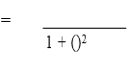
n= z2x p(1-p) /m2
Where,
n is the required sample size, expressed in terms of number of households
N is the total number of households in the village α is the estimated margin of error (7%) for a 93% confidence interval
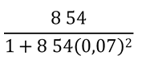
Our sample size n is equal to 165 households.
Census Of Households In Our Sample
The choice of households is defined by a Ki survey step

Ki=6
As Ki is known, we assigned numbers from 1 to Ki on pieces of paper that we drew at random. The first issue printed represented our first household to investigate. The other households were then selected from the previous one, taking into account the sampling step until the nth household was reached.
To start the investigation in a neighborhood, the investigator stood at a central point in the neighborhood and spun a bottle on the ground. The direction indicated by the end of the bottle was chosen as our route. The limitations of this method include random representativeness (not guaranteed), the need for a complete population list, high cost, and the difficulty of obtaining participation from everyone, especially for large samples.
Data Analysis And Processing
The data collected were entered from the input mask made using the Sphinx plus 2 statistical software.
Microsoft Excel and Word version 2021 software made it possible to produce text, tables and figures from the statistical data collected during field surveys.
Results
Table I: Socio-demographic characteristics of heads of households
|
GENDER |
Workforce |
Percentage |
|
Female |
61 |
36,70% |
|
Male |
104 |
63,30% |
|
INSTRUCTION |
|
|
|
None |
70 |
42,42% |
|
Primary |
61 |
36,97% |
|
Secondary |
28 |
16,97% |
|
Superior |
6 |
3,64% |
|
PROFESSION |
|
|
|
Liberal activity |
39 |
23,64% |
|
Agricultural Company Employee |
25 |
15,15% |
|
Civil servant |
11 |
6,67% |
|
Peasant |
50 |
30,30% |
|
Fisherman |
16 |
9,70% |
|
Unemployed |
24 |
14,54% |
|
TYPE D'HABITAT |
|
|
|
Courtyard housing |
66 |
40,00% |
|
Townhouse |
46 |
27,88% |
|
Detached house |
26 |
15,76% |
|
Traditional house |
27 |
16,36% |
|
TOTAL |
165 |
100% |
Table I shows that 63.30% of the heads of households interviewed were men, 42.42% had no level of education, 30.30% were peasants and 40.00% resided in courtyard dwellings (Common courtyard).
Determination Of The Accessibility To Water, Hygiene And Sanitation Of Households In Motobé
Water Sources
The survey identified four (04) main sources of water supply, namely, a Public Drinking Water Network (RéPEP), a single human-powered pump (PMH), several traditional wells and the Comoé River in all seasons. In addition to these springs, rainwater is also used.
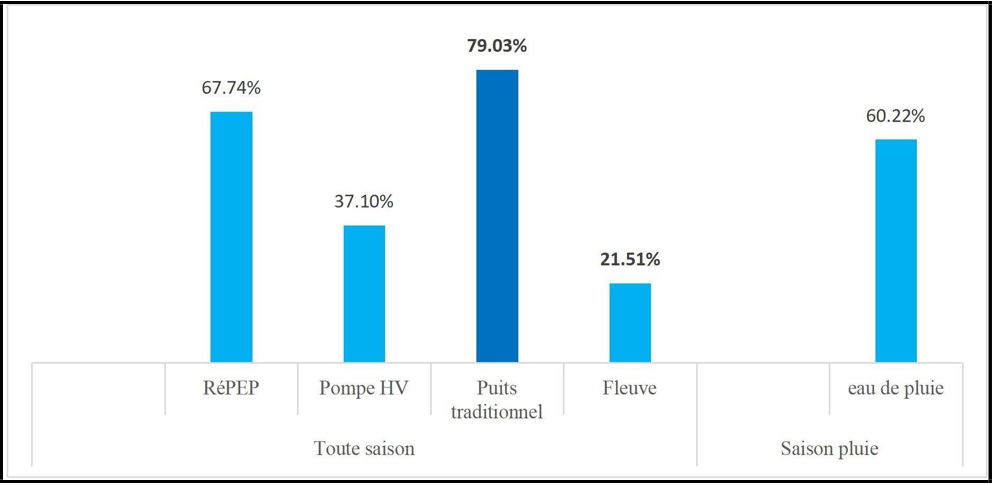
Figure 1: Distribution of households by main source of water
The results in Figure 1 show that in all seasons, 79.03% of households get their water from wells while 21.51% from river water. Rainwater is used by 60.22% of households during rainy seasons.
Use Of Water Sources Outside The REEP
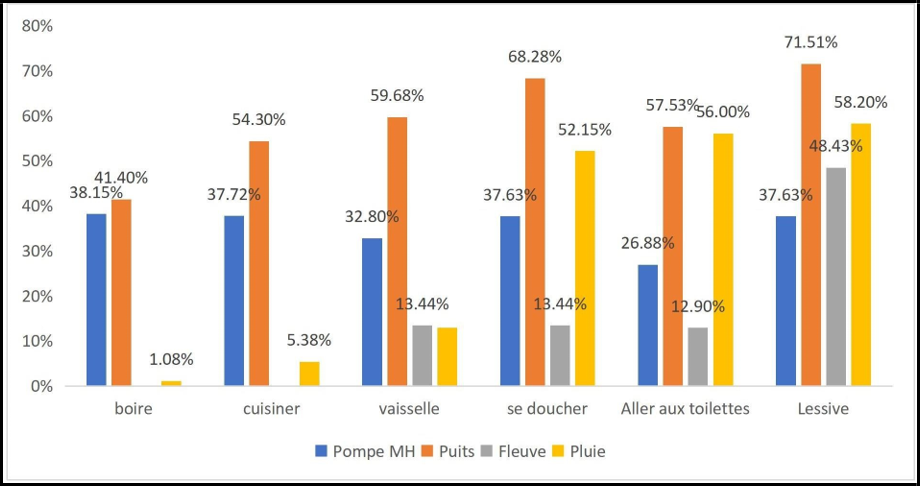
Figure 2: Distribution of households by water use
Figure 2 shows that well water and pump water are used for all needs. For drinking, only the sources of well water and MH pump are used at 41.40% and 38.15% respectively.
Materials For The Management Of Household Waste
Table II: Distribution of households according to the availability or no of bins
|
Presence of Garbage cans |
Workforce |
Percentage |
|
No |
99 |
60,00% |
|
Yes |
66 |
40,00% |
|
Covered waste bin |
Workforce |
Percentage |
|
No |
50 |
30,30% |
|
Yes |
16 |
9,70% |
|
No trash can |
99 |
60,00% |
The table above shows that more than half of the households, i.e. 60.00%, do not have a bin. However, among those who own them (66 households or 40.00%), only 9.70% are closed.
More than half of households, i.e. 60.00%, do not have a garbage can. However, among those who own them (66 households or 40.00%), only 9.70% are open.
Households use 39.25% of traditional latrines, Latrines improved at 27.42%, to toilets and WCs at 19.91% and open defecation to 13.33% due to 9.57% in the bush and 3.76% on the riverside.
Discussion
The results obtained in this study provide a better understanding of household hygiene practices in Motobé, particularly in terms of access to drinking water, management of sanitation infrastructure and domestic hygiene.
Indeed, in terms of socio-demographics, the majority of heads of household were men (63.30%), which reflects a gender imbalance in line with the regional trends observed in the 2021 General Population and Housing Census [5] for the sub-prefecture of Oghlwapo. This male dominance can influence the ownership of hygiene practices within households, especially since studies have shown that men's involvement in water and sanitation management remains limited [14]. Also, men are often absent because they are searching for their daily sustenance; consequently, adopting these hygiene measures can prove difficult without the presence of a cleaning lady. In addition, 2.42% of heads of households have not received any education in this area, limiting their ability to adopt and apply health standards, which corroborates the conclusions of this study carried out in 2014 in Mauritania [3] on the link between socio-economic level and health risks.
In terms of access to water, the majority (67.74%) of households depend on the Public Drinking Water Network (RéPEP). However, this rate remains below the goals set by the SDGs (Sustainable Development Goals), which aim for universal access to drinking water by 2030 [10]. The predominant use of traditional wells (79.03%) and surface water (21.51%) is a concern, especially during periods of drought or during system outages, because they are sources of water contamination by fecal matter. This corroborates M'bra's observations in 2015 [7] on the dependence of rural Ivorian areas on unsafe water sources. The lack of preventive maintenance of infrastructure, as highlighted during our investigation, accentuates this situation.
Regarding hygiene practices, hand washing remains little observed at critical times: Washing hands without soap before eating (40.32%), after handling children's stools (51.61%) and do not wash their hands with soap before cooking and before cooking (62.25%). These results are similar to the surveys conducted by WaterAid in 2020 [16] in Malawi, which report partial adoption of basic hygiene practices, including the use of soap. The direct impact of these behaviours on health, in particular the reduction of diarrhoeal diseases, is widely documented, as illustrated by the F-diagram model of Lanoix and Wagner in 1958 [15]. Improved access to handwashing facilities, combined with awareness campaigns, could help reduce health risks. Indeed, by emphasising hand hygiene, washing raw food, household cleanliness, and the sanitary disposal of wastewater and excreta, we effectively contribute to the health of populations.
Regarding food preservation, the results indicate that 60.00% of households keep their food scraps in covered containers, while 32.73% leave them exposed, increasing the risk of contamination. These practices, combined with a lack of refrigeration (only 7.27% of households have a refrigerator), represent an additional source of health risk. Inadequate food storage can lead to the proliferation of pathogenic bacteria, increasing cases of foodborne illnesses, including gastrointestinal infections, as reported by WaterAid in 2020 [16].
There are also concerns about toilet and household waste management. Only 11.52% of households regularly disinfect their toilets, while 49.09% are satisfied with cleaning with water. In addition, open defecation (13.33%), although lower than the national figures of 35% according to the Demographic and Health Survey [4], remains a common practice. This dismal situation is aggravated by inefficient management of household waste, where 60% of households dump their garbage in the brush and 26.06% constitute illegal dumping. Nguema in 2021 [9] has demonstrated that such practices promote the transmission of faecal-oral diseases in areas where sanitation is deficient.
In terms of associations between water sources and disease reporting, the analysis showed that households using traditional wells are more likely to report cases of diarrhoea and malaria, compared to those using protected water sources such as RePEP. These results confirm Koskei's findings [6], which found that unprotected water sources, including wells and rivers, are associated with an increase in waterborne diseases such as diarrhoea, mainly due to contamination with faecal pathogens. In addition, Curtis and Cairncross in 2003 [1] have shown that access to safe drinking water plays a key role in reducing diarrhoeal diseases, particularly among children under five years of age in developing countries. They say contaminated water sources, coupled with inadequate hygiene practices, significantly increase the risk of diarrhoea and other infectious diseases.
Our results showed that disposing of wastewater directly into nature is associated with a higher prevalence of malaria and diarrhoea. This could be explained by the proliferation of mosquitoes in standing water and environmental contamination. A study conducted by the World Health Organisation in 2017 [11] on the environmental determinants of disease highlighted that improper disposal of wastewater contributes to the proliferation of disease vectors such as mosquitoes, thereby increasing the incidence of malaria and dengue fever.
Conclusion
The general objective of this work was to analyze the risky practices related to the lack of hygiene in Motobé's households. At the end of this study, it appears that water, hygiene, sanitation and household waste management have many shortcomings. Its situation is marked by the discharge of untreated liquid and solid waste into nature and surface water, leading to the deterioration and disappearance of many animal and aquatic resources. The many inappropriate practices identified could also be detrimental to the health of populations.
The village of Motobé is under anthropogenic pollution in its soil, subsoil and surface water and groundwater.
At the end of this study, it is found that there are gaps in water, hygiene, sanitation and household waste management. This leads to the discharge of wastewater and waste into nature without treatment, which has a significant impact on the water resources and the environment of the village.
Source Of Funding: This study did not receive any funding.
Authors' Contributions
N'GUESSAN Konan: design of the study, conduct of surveys, writing of the manuscript.
ATTOH-TOURE Harvey: proofreading and validation of the manuscript
ABINA Audrey: data analysis, data validation, proofreading and revision of the manuscript
KONAN Sidoine: data analysis, revision and validation of the manuscript
DIABAGATE Mahama and Arthur SERIGBALET: data collection and entry, proofreading of the manuscript
Consent: Participation in the study was free and anonymous. Each respondent was free and could leave the survey at any time without any inconvenience
Conflicts Of Interest: The authors do not declare any conflict of interest.
References
- Curtis V, Cairncross S (2023) Effect of washing hands with soap on diarrhoea risk in the community: a systematic review. Lancet Infect Dis. 3(5): 275-81.
- United Nations Children's Fund (UNICEF) and World Health Organization (WHO). State of hand hygiene around the world. 2021.
- Ibrahim S, Keita M, Traoré D, Koné B, Bâ K, et al. (2014) Water, hygiene, sanitation and health in precarious neighbourhoods in Nouakchott (Mauritania): contribution to the ecohealth approach in Hay Saken. Vertigo - the electronic journal in environmental sciences.
- National Institute of Statistics (INS) and ICF. (2023) Côte d'Ivoire Demographic and Health Survey, 2021. Final Report.
- National Institute of Statistics. General Population and Housing Census 2021. Abidjan: National Institute of Statistics; 2021.
- Koskei E, Koskei R, Koske M, Koech H (2013) Effect of Socio- economic Factors on Access to Improved Water Sources and Basic Sanitation in Bomet Municipality. Research Journal of Environmental and Earth Sciences. 5(10): 714-719.
- M'bra KR, Koné B, Kouakou YE, Silué B, Cissé G, et al. (2015) Drinking water supply, resource quality and health risks associated with Korhogo (North Côte d'Ivoire) [Internet]. Environment, Risks & Health. 14(3): 230-241.
- Ministry of Health, Public Hygiene and Universal Health Coverage (MSHPCMU). Annual Report on the Health Situation (RASS) 2020. Abidjan: Directorate of Information Technology and Health Information (DIIS); 2022. 208 p.
- N'guema PF, Efon B, Defo C, Mounir ZM, Oumm EK (2021) Impacts of hygiene and sanitation practices on surface and groundwater in the city of Yaoundé, Cameroon. Afrique Science – International Journal. 21(3): 39-50.
- United Nations, Economic Commission for Africa. MDGs- Agenda 2063/SDGs: Transition Report 2016: Towards an Integrated and Coherent Approach to Sustainable Development in Africa. Addis Ababa: United Nations, Economic Commission for Africa; 2017.
- World Health Organization (2017) Global vector control response 2017–2030.
- World Health Organization (2024) Key Benchmarks on Sanitation.
- Ouassa MK, Soumanou ITK (2021) Sociocultural burdens related to the appropriation of hygiene practices in Djougou primary schools in Benin.
- The Sanitation learning hub (2022) Engaging Men and Boys for Gender-Transformative WASH - Sanitation Learning Hub.
- Wagner EG, Lanoix JN (1958) Excreta disposal for rural areas and small communities. Monogr Ser World Health Organ. 39: 1- 182.
- WaterAid. To remove barriers to good hygiene practices in Southern Africa. Synthesis of the findings of the formative studies conducted in five countries. London: WaterAid; 2020.12 p.